
Everyone wants high return investments that are safe. The challenge is balancing investment safety with growth. Secure investments typically have modest returns. Chasing very high returns means taking on more risk.
This guide explores low-risk, high-return investment options. It covers strategies to maximize returns without undue risk. We’ll examine traditional safe assets and high-yield investments. We’ll also introduce an innovative approach with GoldFlex. All are designed to boost your portfolio yield while preserving capital.
Understanding the Risk-Return Trade-Off

Investing always involves a trade-off between risk and return. Experts recommend focusing on risk-adjusted returns. This means aiming for decent growth without taking reckless risks. A common principle applies: if someone promises extremely high returns with zero risk, be skeptical.
Instead, build a diversified portfolio. Include a mix of low-, moderate-, and higher-risk assets suited to your goals. This spreads risk and can improve your overall returns. Including some stocks (for growth) alongside bonds or savings (for capital preservation) creates balance.
Diversification is a core wealth-building strategy used by professionals. Diversification achieves compound returns over time while controlling volatility.
By combining assets thoughtfully, you can generate income and growth with limited risk. Prudent investment strategies for high yield make this possible.
Traditional Safe Investment Options (Low Risk, Moderate Returns)
Even in a high-rate environment, some low-risk high-return investments can deliver reasonable yields. Below we outline secure options known for preserving principal while providing predictable income. These are ideal for capital preservation and steady growth.
High-Yield Savings Accounts and Money Market Funds

One of the simplest safe investments with high returns is a savings account. While not technically an “investment,” today’s best high-yield savings accounts offer a modest return on cash. They carry virtually zero risk.
While yields fluctuate, many online banks provide interest rates far above traditional accounts. These accounts are typically FDIC-insured up to $250,000 Your money is protected by the government if the bank fails, so you won’t lose your principal. This makes it as safe as it gets.
Money market funds are another secure option. These mutual funds invest in low-risk, short-term debt (like CDs and Treasuries) to earn interest. They provide higher yields than standard bank accounts while remaining highly liquid. You can usually withdraw anytime without penalty, similar to a savings account. Money market funds aren’t bank-insured, though they invest in very low-risk securities and maintain stable values.
Why choose these: Both high-yield savings and money market funds provide investment safety with instant liquidity. They won’t deliver huge returns. Interest might be a few percent annually. But you gain passive income with virtually no risk.
Certificates of Deposit (CDs) and Fixed Deposits
Certificates of deposit (CDs) are time-bound bank deposits. They’re known as fixed deposits in some countries. They typically offer higher interest in exchange for locking up your money.
A bank or credit union offers you a fixed rate of return for a set term. Terms range from a few months to several years. CDs are extremely low-risk. If held to maturity, CDs guarantee your principal and interest. They are also insured by FDIC (or equivalent national insurance) up to $250,000 per depositor. There’s virtually no default risk.
Why invest in CDs: They often pay higher rates than regular savings accounts, especially for longer terms. This makes them attractive when you won’t need the cash for a while.
Investors can choose the term length that suits their needs. Interest rates are typically higher than savings accounts. In early 2024-2025, short-term CD rates have been quite competitive due to higher overall interest rates.
The downside is liquidity risk. Your money is committed until the CD matures. Withdrawing early usually incurs a penalty, typically in the form of lost interest, though principal generally remains protected. Plan carefully and only invest money you won’t need immediately.
There are also no-penalty CDs that allow early withdrawal, though they often offer slightly lower yields.
Bottom line: CDs are among the safest investment options. They are essentially loss-proof in an FDIC-backed account, as long as you don’t withdraw early. They work well for achieving a guaranteed return by a specific date.
To get the best rates, shop around online for top offers, be mindful of the term, ensure you won’t need the funds, or ladder your CDs (stagger maturities) for flexibility. CDs provide a guaranteed yield with minimal risk. They’re a staple for low-risk high-return investments in a relative sense.
Government Bonds and Treasury Securities
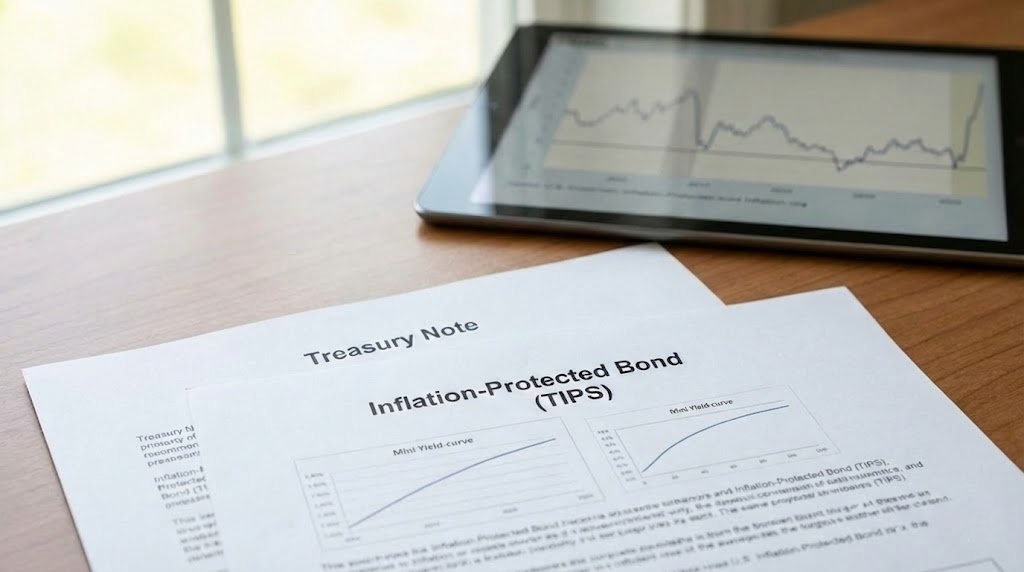
Government bonds are a classic secure investment. These are essentially IOUs from governments, used to fund their operations. In countries like the U.S., Treasury bills, notes, and bonds are considered very low-risk. They’re backed by the government’s full faith and credit.
If held to maturity, Treasurys virtually guarantee your principal plus interest. The government is extremely unlikely to default, offering predictability and safety unmatched by most other assets.
In return for this safety, Treasury securities pay moderate interest. A 1-year Treasury bill or a 10-year Treasury note has a fixed yield. This yield is generally lower than riskier bonds or stocks.
However, in the current environment, yields on short-term government bonds have become quite attractive. They often outpace inflation.
Treasury Inflation-Protected Securities (TIPS) are a special type of bond. They adjust principal for inflation, ensuring your investment keeps pace with rising prices. TIPS pay a lower base interest, but their value increases with inflation. This can protect your purchasing power.
Risks: If you sell a bond before it matures, its market value can fluctuate. Rising interest rates make existing bond prices drop, so you could lose money selling early. To avoid that, many investors simply hold bonds to maturity.
If you invest in foreign government bonds, consider currency risk and the government’s credit quality.
For U.S. Treasuries and similar top-rated sovereign bonds, default risk is essentially zero. As long as you can wait until maturity, you won’t lose money on the principal or promised interest.
This makes government bonds a cornerstone for investment safety. They’re ideal for capital preservation and steady income. Many retirees and conservative investors allocate heavily to bonds. They ensure capital protection while generating reliable interest income.
Investment-Grade Corporate Bonds

Corporate bonds issued by strong, profitable companies can offer slightly higher returns than government bonds. They still keep risk low. These investment-grade bonds come from firms with good credit ratings.
They pay a fixed interest coupon to investors, usually semi-annually. They return principal at maturity, though because companies can default, corporate bonds are somewhat riskier than Treasuries.
However, bondholders rank higher in the pecking order than stockholders if a company runs into trouble. Bond investors have a claim on assets before equity holders, making bonds safer than stocks of the same company.
Why consider corporate bonds: Yields on high-quality corporate bonds typically exceed those of similar-maturity Treasuries. This extra yield (the “credit spread”) compensates for the small default risk.
A blue-chip company might issue a 5-year bond yielding a couple of percentage points more than a 5-year Treasury. Over time, this higher yield boosts your return. Corporate bonds can thus be a low-risk, high-return investment relative to pure safe havens.
Risks: Apart from interest rate risk (shared by all bonds), there’s default risk, meaning the company could fail to repay. To mitigate this, stick to investment-grade bonds (rated BBB/Baa or above) from reputable, stable companies, or invest via a diversified bond fund.
A bond fund spreads your money across many issuers, so even if one defaults, the impact is limited. Choosing shorter-term bonds (maturing in a few years) reduces sensitivity to interest rate changes and uncertainty.
If your goal is safety, avoid junk bonds (high-yield corporate bonds with low credit ratings). While these bonds offer much higher interest, they carry significant default risk. In the context of “safe investments,” junk bonds don’t qualify.
Instead, focus on high-grade corporate debt or funds that hold mostly quality bonds. These can deliver a decent risk-adjusted return somewhere between Treasuries and stocks.
Dividend-Paying Stocks and REITs
Moving slightly up the risk spectrum, dividend-paying stocks provide an opportunity for higher returns, offering both regular income and equity growth. These are shares of well-established companies.
These stocks are often from sectors like utilities, consumer staples, or banking, where companies distribute part of their profits as dividends to shareholders. Stocks are not safe in the way bonds or savings accounts are, as their prices fluctuate.
However, dividend stocks are generally less volatile than high-growth stocks. The dividend acts as a cushion, so even if the share price dips, you still receive cash payouts. This makes them popular income-generating investments.
Dividend-paying companies tend to be mature and stable. Their regular payouts can help limit downside movements. During a market downturn, a strong dividend stock might decline less than a non-dividend tech startup, as investors value the steady income stream. You can also reinvest dividends to buy more shares, harnessing compound returns over time.
Examples: Blue-chip companies like Coca-Cola and Johnson & Johnson have decades of paying and regularly increasing dividends. Utility companies pay high yields too.
REITs (Real Estate Investment Trusts) deserve mention here. REITs are companies that own income-producing real estate. This includes apartments, offices, and shopping centers. REITs are required to pay out most of their earnings as dividends.
REITs often offer relatively high yields, commonly 4–6% or more annually. This makes them appealing for investors seeking the best investments for income and growth, offering regular income and potential property value appreciation. However, REIT share prices can be volatile with stock market fluctuations and interest rate changes.
Risks: Dividend stocks and REITs are still stocks and can lose value due to market fluctuations or company-specific issues. There’s also the risk that a company cuts or suspends its dividend during tough times, which often causes the stock price to drop. Many banks reduced dividends in the 2008 crisis.
While these are higher return investment options compared to bonds, they require tolerance for moderate risk. Diversify across sectors and regions, or use a dividend-focused mutual fund or ETF for broad exposure.
In summary: Dividend investing can be a smart way to get higher returns with moderate risk. You achieve a stream of passive income and potential stock price growth. Unlike a bond’s fixed interest, dividends are not guaranteed and depend on the company’s earnings.
As part of a balanced strategy, dividend stocks or REITs can play a valuable role. They provide portfolio income and upside, while pure safe assets protect your principal.
Leveraging Gold for Stability and Growth (The GoldFlex Approach)
Gold has long been considered a safe-haven asset. It serves as a store of value in times of uncertainty. However, holding physical gold (or a standard gold account) by itself isn’t a great way to earn income.
Gold bullion does not pay interest or dividends, so your returns come only from price appreciation. Many bank gold accounts even pay zero interest on your gold balance. Your holdings just track the gold price. Traditional gold investing is more about capital preservation and hedging inflation rather than generating regular income.
How GoldFlex Works
GoldFlex offers a modern solution to this problem. It is not a typical gold savings account where your gold sits idle in a vault for small interest. Instead, GoldFlex is positioned as a flexible gold-backed investment account. It actively works to give you higher, more predictable returns on your capital.
According to the GoldFlex model, when you deposit funds, that capital is directly invested into raw gold purchases plus sales in the market. This happens repeatedly. GoldFlex uses your funds to buy gold. Then it sells multiple times.
This essentially involves trading within the gold market’s natural price fluctuations, with the goal of capturing frequent small profits from gold’s movements that are then returned to you as yield.
By cycling through multiple buy-sell transactions, a GoldFlex account seeks to generate continuous returns. This differs from a static gold holding. Your investment is still backed by the intrinsic value of gold. This provides a layer of security. Gold tends to hold its value over the long term.
Additionally, the active trading strategy means your capital is deployed immediately in the market. Rather than sitting idle, the approach aims for potentially higher returns. This approach may exceed returns from simply holding gold or keeping cash in a low-interest account.
Security Plus Yield
GoldFlex marries the safety of gold with an innovative, managed trading approach to produce yield. This approach aims to combine gold’s capital preservation qualities with income-generating objectives.
Such an approach may appeal to investors seeking both asset backing and return potential. Most fixed-income securities (like bank deposits or bonds) pay a fixed interest. GoldFlex’s returns come from active market opportunities. Yet it remains anchored to a tangible asset.
It’s an alternative investment strategy worth considering. It aims to boost your portfolio’s yield, though like all trading strategies, it involves market risk. By diversifying part of your capital into GoldFlex or similar solutions, you could potentially earn better returns. This beats a regular gold account or savings account while still prioritizing investment safety.
Putting It All Together: Strategies for High Returns with Low Risk

We’ve discussed a range of options. These span from ultra-safe cash accounts to lower-risk, moderate-return investment options like bonds and dividend stocks. We’ve also covered an innovative GoldFlex account. How should an investor put these pieces together?
Key Strategies and Takeaways
Diversify across asset classes: A blend of different assets can achieve an attractive overall return with less risk than a single high-flyer investment.
A portfolio might include high-yield savings (for liquidity), some Treasuries or CDs (for safety plus steady interest), plus a mix of dividend equities or REITs (for higher income plus growth). Even if one asset underperforms, others may compensate.
Use core-satellite approach: Keep a core of very safe assets to protect your principal and provide stability. Add satellite positions in carefully chosen higher-yield investments.
The core (perhaps 60–70% in bonds, fixed deposits, etc.) ensures capital protection. The satellites (30-40% in things like dividend funds, GoldFlex, etc.) aim to boost returns. This approach aligns with maintaining a risk threshold you’re comfortable with.
Reinvest and compound: To truly maximize wealth-building, reinvest the income from your investments when possible. Interest from bonds, dividends from stocks, or profits from GoldFlex can be reinvested to buy more assets.
Over time, this compounding effect significantly increases your overall return, even with safe investments. Compounding is a powerful force for long-term investors.
Stay vigilant about risk: Even with safe instruments, remember that inflation and taxes can erode real returns. Ensure that your yield exceeds inflation so your purchasing power grows.
Be cautious of any too-good-to-be-true schemes, verify whether an investment is insured, and check what underlying assets support it. Regulatory bodies warn that if someone guarantees very high returns with no risk, it’s likely a red flag.
Consider professional advice for complex products: If you’re exploring newer options like GoldFlex or specialized funds, consult a financial advisor. They can help assess how it fits into your overall strategy and risk profile. The goal is to improve your returns without jeopardizing your financial security.
Conclusion
Safe investments with high returns do exist, though they often require a strategic mix of assets and sometimes an innovative approach. By understanding the risk-return trade-off and carefully selecting investment strategies for high yield, you can grow your capital securely
Whether it’s through a ladder of CDs, a portfolio of bonds plus dividend stocks, or leveraging a GoldFlex account for extra yield, the key is to stay informed. Remain balanced in your approach.
With the right plan, you can protect your money while pursuing solid returns with appropriate risk levels.