
Renewable energy stocks have become a focal point for investors worldwide. The shift toward clean energy stocks accelerates each year. These green energy stocks represent companies in solar, wind, hydro, and other sustainable power industries. They stand at the forefront of the global energy transition.
The appeal is clear. Rising climate concerns and government policies fuel massive investment in renewables. This creates exciting green energy investment opportunities. Yet alongside the promise of high growth, significant risks exist. Market volatility and policy uncertainty are factors investors must weigh.
This article explores the opportunities and risks of investing in renewable energy stocks. It also looks at alternative energy stocks, ETF options, and how a GoldFlex account can support a balanced, sustainable investing strategy.
Why Renewable Energy Stocks Are Booming

Global efforts to combat climate change have put renewable energy companies in the spotlight. Governments and corporations are pouring unprecedented capital into clean energy. Billions of dollars are being invested in renewable infrastructure and technology, spanning solar farms, wind parks, hydropower dams, biomass plants, and geothermal projects.
Surging Energy Demand and Climate Goals
Many experts project that over half of global energy supply could come from renewable resources by 2050.
Countries have set aggressive renewable targets under accords like the Paris Agreement. Legislation and climate policies are driving increased investment in clean energy industries.
Technological Advances and Cost Declines
The cost of solar panels, wind turbines, and battery storage has plummeted over the past decade. This improves profitability, as do efficiency gains in solar power investing, such as better photovoltaics. Larger, more efficient wind turbines have made renewable projects more competitive with coal and gas.
This strengthens profit margins for leading solar and wind energy stocks, helping accelerate further adoption.
Energy Security and ESG Demand
Geopolitical events have underscored the need for energy independence. Governments see domestic solar and wind capacity as a way to reduce reliance on imported fuels. Together, the energy security imperative and growing public pressure to cut carbon emissions are giving renewables strong, long-term tailwinds.
ESG investing trends have driven a surge of capital from both institutions and retail investors looking to align their portfolios with sustainability. Many clean energy stocks benefit from being included in ESG funds and indexes, which can lift their valuations.
Economic Growth and Job Creation
The green energy boom is also a major economic opportunity. Building solar parks, wind farms, and power grids creates jobs and supports new industries. Renewables now play a big role in economic growth, with millions of jobs worldwide in manufacturing, installation, and maintenance. This wide impact helps keep government and financial support strong.
Looking Ahead
Thanks to these trends, clean energy stocks in 2026 and beyond are positioned for robust growth. Major players like NextEra Energy and Brookfield Renewable combine scale with stable cash flows.
Innovative newcomers in niches like hydrogen stocks, electric vehicle stocks, and battery storage companies are also drawing attention. They form part of the clean-energy ecosystem.
Opportunities and Growth Potential in Green Energy Stocks
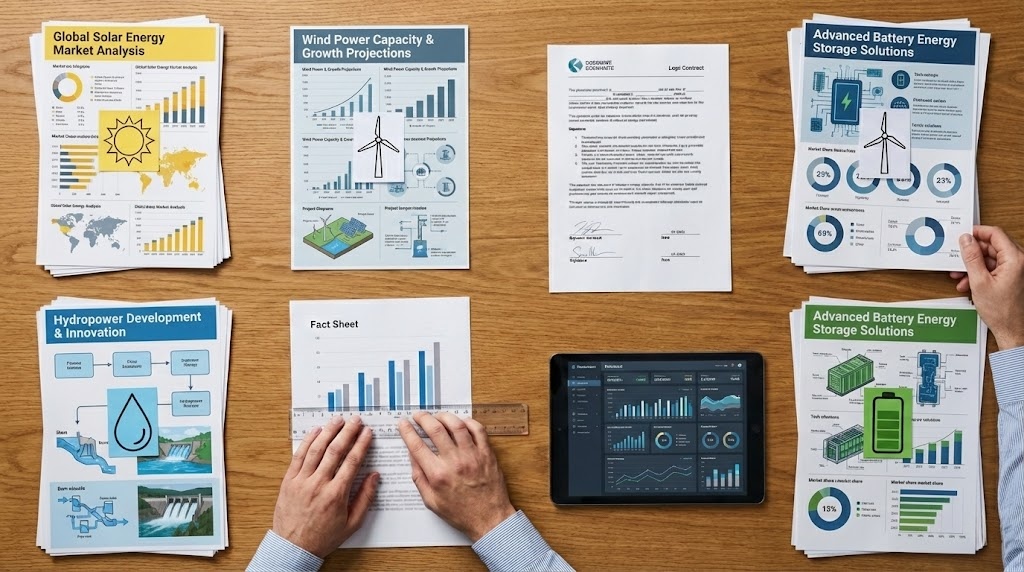
Investing in green energy stocks offers several compelling advantages. The first advantage is the sheer growth potential, as renewable energy capacity has been growing at double-digit rates annually. This is especially true in solar energy stocks and wind energy stocks. This growth outpaces most traditional sectors.
Rising corporate procurement of clean power further boosts renewable developers’ pipelines, with tech giants buying solar and wind power as one example. Expanding electrification (like EV adoption) is another.
Predictability of Cash Flows
Another opportunity is the relative predictability of cash flows for certain renewable investments. Many large renewable operators secure long-term Power Purchase Agreements (PPAs) for their electricity output. These PPAs lock in stable prices for 10–20 years. This arrangement provides reliable revenue.
Utilities like NextEra Energy (a renewables leader) leverage such contracts to support steady dividends. Companies with regulated or contracted renewable assets can offer passive income characteristics that appeal to income investors seeking stability in a sustainable portfolio.
Diversification Within Renewables
The sector spans solar, wind, hydro, geothermal, biomass, energy storage, and other technologies. Wind energy companies like Vestas and Ørsted focus on turbines and offshore wind farms. Solar stocks like First Solar and Enphase specialize in panels and inverters.
Alternative energy stocks exist in emerging areas too. These include geothermal firms, hydrogen fuel cell makers, and companies involved in carbon capture. The wide range of technologies and geographies (U.S., Europe, China, etc.) provides options.
Government Incentives
Subsidies and green policies lower costs and raise returns for renewable projects, helping companies become profitable faster. This support also attracts large private investment and can boost clean energy stocks.
Investor Sentiment
People like the idea of investing in a cleaner future. This brings more money into clean energy funds and renewable stocks. When good news hits—such as climate promises or higher oil prices—these stocks can rise quickly. As more investors move away from fossil fuels, the whole clean energy sector can benefit.
Key Segments and Leading Renewable Stocks
| Segment | Examples of Leading Companies | Focus Area |
| Solar Power | First Solar (US), LONGi Green Energy (China) | Solar panels, PV technology |
| Wind Energy | Vestas (Denmark), Ørsted (Denmark) | Wind turbines, wind farms |
| Renewable Utilities | NextEra Energy (US), Brookfield Renewable (Canada) | Diversified solar/wind portfolios (often with PPAs) |
| Energy Storage and Batteries | Tesla (US), Energy Vault (US) | Battery systems, grid storage |
| Hydrogen and Fuel Cells | Plug Power (US), Nel ASA (Norway) | Green hydrogen production, fuel cells |
| Clean Energy ETFs | iShares Global Clean Energy ETF (ICLN), Invesco Solar ETF (TAN) | Baskets of global clean energy stocks |
Risks and Challenges of Investing in Renewable Energy Stocks

Despite their long-term promise, investing in renewable energy stocks comes with significant risks.
Market Volatility
Perhaps the most immediate risk is market volatility, as these stocks can be highly sensitive to changing economic and policy conditions. In 2023, clean energy stocks sharply underperformed the broader market.
Negative news (such as project delays or cost overruns at major renewable firms) combined with macro pressures led to a broad clean energy stock downturn. Renewable stocks often trade with high volatility, with years of outstanding gains punctuated by sudden drops.
Interest Rate Risk
One major factor contributing to volatility is interest rate risk. Renewable energy projects (building a wind farm or solar park) are capital-intensive. They are often financed with significant debt, so when interest rates rise, borrowing costs climb.
Policy and Regulatory Risks
As a policy-driven sector, renewable energy is vulnerable to changes in government support that can make or break profitability. Reductions in subsidies, delays in approving projects, or adverse trade policies (such as tariffs on solar panels) can all hurt companies.
Policy support is a double-edged sword: while generous incentives boost returns now, there’s always a risk of policy reversal or political shifts. These could undermine the investment thesis.
Technology and Competitive Risk
The sector’s fast growth attracts well-funded competitors. Oil and gas majors are investing heavily in renewables. Companies that fail to maintain an edge in cost, efficiency, or scale may underperform.
Unpredictable Profitability
Past performance does not guarantee future results, and individual renewable stocks carry inherent risk since momentum can reverse quickly in this sector.
Operational and Reliability Issues
Renewable infrastructure also carries environmental costs. Renewable projects also take years to deliver net environmental benefits, and if not managed properly, such concerns could trigger stricter regulations or public backlash.
Summary of Risks
Renewable energy stocks are not a one-way bet, as they carry volatility, sensitivity to macro factors like interest rates, and dependence on favorable policies and technology trends. Investors should be prepared for significant volatility.
As analysts note, the clean energy journey will create structural growth, though rarely in a straight line, and investors should expect volatility along the way. Prudent investors manage these risks through diversification and by considering alternative or complementary investments alongside renewables.
Investing via Stocks vs. Clean Energy ETFs

Investors interested in renewables can choose between picking individual renewable energy stocks or investing in broader funds like clean energy ETFs. Each approach has advantages and disadvantages.
Individual Green Energy Stocks
Stock-picking in renewables requires research and conviction. Investors must monitor each company’s health and, when adding a stock to their portfolio, look beyond performance to understand the business, its ESG impact, and fundamentals.
For beginners, jumping into individual alternative energy stocks may be risky without deep knowledge, as these stocks can be highly volatile.
Clean Energy ETFs
ETFs offer an accessible way for beginners to invest in clean energy without picking individual winners. They typically have lower expense ratios than actively managed funds, making them cost-effective.
Finding Your Mix
Many investors combine both approaches. Many investors maintain a core ETF position for broad exposure while adding select individual stocks based on strong conviction.
The key is aligning your allocation to this volatile sector with your risk tolerance. Renewable energy can be a sound investment for long-term investors optimistic about a low-carbon future. Balance is essential, and diversification plus awareness of sector risks should guide your decisions.
Alternatives and Diversification Beyond Renewable Stocks
While renewable stocks can offer high growth, their volatility means investors may want to balance them with more stable assets. Diversification is crucial for a resilient portfolio.
Green Bonds and Sustainable Debt
Instead of equity, investors can support the clean energy transition via green bonds. These are bonds issued to finance environmental projects. Examples include wind farms or solar installations.
Green bonds typically pay fixed interest. They offer predictable returns with lower risk than stocks. A government or utility might issue a green bond to fund a renewable project. Investors receive regular interest payments. They get principal back at maturity.
Green bonds, sustainable investment loans, green bond ETFs, and carbon credits can provide lower-volatility complements to renewable stocks in a portfolio.
Traditional Energy and Utility Stocks with ESG Twists
Some investors diversify by holding traditional energy companies pivoting to renewables. Utilities that provide stable dividends also serve as effective diversifiers.
Large utilities or infrastructure firms often have renewable segments. They also have regulated businesses that generate steady cash, which can act as a buffer by providing yield and stability.
ESG investing doesn’t strictly mean renewables. You could invest in companies improving energy efficiency, grid technology, or electric utilities greening their mix. Such investments may not have the explosive growth of pure renewable plays, but they tend to be less volatile.
Precious Metals (Gold) and GoldFlex Account

A very different alternative is to balance high-volatility renewable stocks with a safe-haven asset like gold. Gold has long been considered a store of value. It tends to maintain its value during market turbulence or inflation.
This is where a GoldFlex account comes into play as an alternative. It serves investors seeking stability with returns.
What is GoldFlex?
GoldFlex is a flexible gold investment system designed to produce more predictable returns from gold trading. Unlike a standard gold account where your gold simply earns minimal or zero interest, a GoldFlex account actively puts your capital to work.
The funds you deposit are directly invested in physical gold purchases and sales in the market on a frequent basis. The aim is to capture gains from price fluctuations.
Through a strategy of buying and selling raw gold multiple times, GoldFlex seeks to generate yields for the investor. Rather than relying solely on gold’s price appreciation, the approach immediately deploys your capital in active trading. The capital is continuously cycled through gold trades, with profits credited to your account.
This approach aims to offer more consistent returns compared to the fluctuations of equity markets, though trading returns remain variable. While somewhat analogous in structure to a high-yield savings strategy, it uses gold trading as the mechanism for generating returns.
GoldFlex as a Portfolio Stabilizer
From a risk perspective, GoldFlex is positioned as a safer, asset-backed alternative. By actively managing trades, it aims to deliver returns superior to those from simply holding gold. This makes a GoldFlex account an attractive alternative investment. It suits investors who want security plus steady yield rather than stock volatility.
GoldFlex is not about speculating on gold’s price shooting up. It’s about consistent gains from market cycles.
That predictability is especially valuable when juxtaposed with renewable stocks. Those might swing 30% in a year either direction. Incorporating GoldFlex into a portfolio alongside renewable energy stocks could improve the risk-reward balance. It anchors the portfolio with a guaranteed-return style asset.
Other Alternatives: ESG Funds and Balanced Portfolios
Investors might also consider broader sustainable investing funds or balanced ESG portfolios, as some ESG robo-advisors and mutual funds mix green stocks, green bonds, and other assets. They achieve a more moderate risk profile.
Green real estate (eco-friendly REITs) or infrastructure funds can be part of the mix too. These investments include infrastructure such as smart grids and renewable energy storage.
The overarching theme is diversification. By blending different asset classes (equities, bonds, gold) and different themes (renewables and others), investors can pursue sustainable goals. You avoid over-concentration in one volatile sector.
Comparing Investment Options
| Investment Option | Pros | Cons |
| Individual Renewable Energy Stocks | High growth potential (if you pick winners); direct exposure to solar, wind, etc.; can align with personal values | Very volatile; company-specific risks; requires research and active monitoring; no guaranteed returns or income |
| Clean Energy ETFs (Broad Renewables Fund) | Instant diversification across many green energy companies; lower risk than individual stocks; easy to invest; captures overall sector growth; good for beginners | Still subject to sector-wide volatility; limited upside from any single stock’s outperformance; expense ratio fees; holdings overlap in many ETFs |
| GoldFlex Account (Active Gold Trading) | Stable, predictable returns generated from gold trading; backed by physical gold (safe-haven asset); low correlation with stock market; ideal for capital preservation with some growth | Lower return potential compared to high-growth stocks; involves exposure to gold price fluctuations (though mitigated by active management); not a “green” investment |
Each option serves different goals: high growth, diversification, or stability.
Renewable energy stocks offer excitement and upside, though at the cost of volatility and uncertainty. Clean energy ETFs provide a middle ground with diversification across the clean energy spectrum, proving especially useful for those starting out or preferring a broader approach.
A GoldFlex account stands apart as a low-volatility alternative. It may be suitable for balancing portfolio risk and potentially generating returns during periods of equity market volatility, though performance varies based on market conditions.
By combining these elements, investors can build a sustainable and well-rounded portfolio.
Conclusion
Investing in renewable energy is not just about chasing returns but also about aligning with a future powered by clean energy. A balanced approach works best. Capture the growth of renewable energy stocks. Mitigate risk through diversification using tools like clean energy ETFs plus GoldFlex for stability.